EDUCATIONAL PHYSICAL THERAPY POSTS BY DR. SABRINA J GRAY

Runners, Hip Pain/ Dysfunction, & the Iliopsoas
Symptoms of an adaptively shortened Iliopsoas muscle include low back pain, hip pain, lower abdominal pain, groin pain. This can result in a low back injury (stenosis) overtime, increased pressure in the hip joint (increasing risk of arthritis), irritation of the hip labrum, & can create arthritis like pain (the tendon can put pressure on the veins of the femoral neck creating a deep pain sensation). All of these symptoms are the resulted of a lack of hip extension due to the increased tension in the Iliopsoas. A slow recreational runner should have 20 degrees of hip extension, a faster recreational runner should have 30 degrees, while an elite runner should have 40 degrees. The Iliopsoas is not the only cause of limited hip extension, but it is a common one. As always, treatment is never one size fits all.
Concierge Care by Dr. Sabrina J Gray of Hands On Care Physical Therapy Serving Branford, Guilford, & Madison CT
Running IT Band Pain & how Concierge Physical Therapy can Help
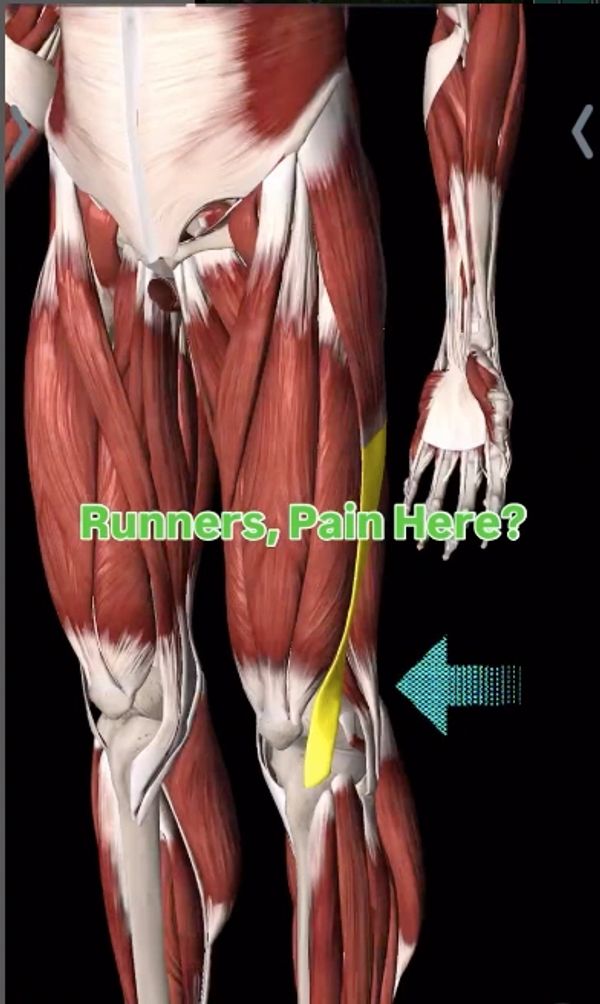
Runners, Pain here?!
Stop trying to roll out your IT Band, it won’t work. Look at this structure, foam rolling won’t change the length of the dense fascia that is your IT Band & it is not really what is causing your pain.
The pain is more likely coming from the highly sensitive fat pad between the outside of your knee and the IT band that gets compressed with faulty mechanics including the knees falling inward and the pelvis dropping to the opposite side.
Active release Technique or Dry Needling to the Tensor Fascia Latae (TFL) can provide immediate relief as tightness in this muscle increases the compression of the IT band on the knee, but for a long term solution these manual therapy options must be combined with exercises to offload the TFL stabilize the pelvis, hip, & knee rather than trying to lengthen the IT Band.
Concierge Care by Dr. Sabrina J Gray of Hands On Care Physical Therapy Serving Branford, Guilford, & Madison CT
The Dreaded Shin Splints
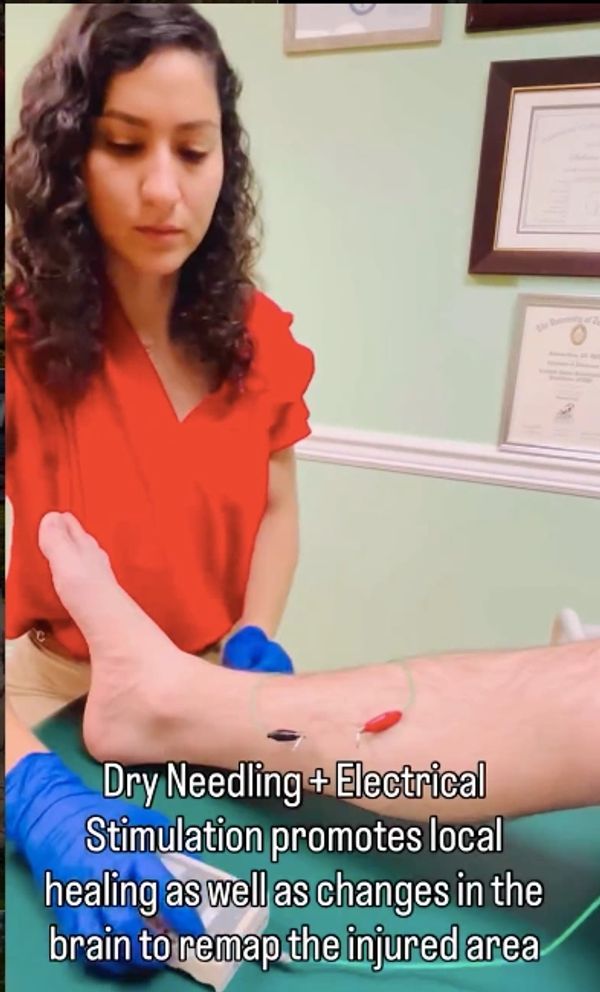
Shin Splints, a common Running injury that if not treated properly seems plague runners for years. Flexor Digitorum Longus is the muscle that curls the lesser toes in & attaches to the bone at the painful shin area (for most presentations). This injury affects the bone, tendon, & muscle as they are pulled excessively due to weakness in the muscles that control hip & ankle/foot rotation. Dry Needling with Electrical Stimulation is my treatment of choice for this condition due to access to each tissue involved & due to increased brain engagement, but is absolutely not the only choice (Active Release Technique can be utilized if needles just aren’t your thing). My non-negotiable is loading the area with the correct activation of hip & ankle/ foot stabilizers directly after treatment to guide the correct collagen deposition so you heal faster & stronger. Get back to running pain free, give me a call
Concierge Care by Dr. Sabrina J Gray of Hands On Care Physical Therapy Serving Branford, Guilford, & Madison CT